


Bathroom Dehumidifier: Why You Shouldn’t Use One And The Alternatives
Excess moisture, common in bathrooms, causes mould which can be very dangerous. For that reason and others, many people think about getting a ‘bathroom dehumidifier’ – but is that safe?
Key takeaways: Bathroom dehumidifiers
- We don’t recommend using a dehumidifier in a bathroom. Dehumidifiers can come with instruction manuals warning you not to use the dehumidifier in the bathroom.
- Assuming your dehumidifier is wired – needing mains power electricity to work – and your bathroom is the average size, it would be against regulations to use it
- There are many other ways to remove excess moisture from your bathroom including extractor fans and windows
What is a dehumidifier?
A dehumidifier is an electrical appliance designed to remove excess moisture from the air in an enclosed space, thereby reducing and maintaining the level of humidity to a desired level.
This process helps to create a more comfortable and healthier indoor environment, prevents the growth of mold and mildew, reduces musty odors and protects property from moisture-related damage. Here’s how it works:
- The device draws in moist air from the room.
- The air passes over cold coils (in refrigerant models), causing the moisture to condense into water droplets, which are collected in a tank or drained away.
- The now drier air is slightly reheated and released back into the room.
Many households use dehumidifiers to reduce humidity in homes to prevent damp, condensation and mould. They reduce allergens such as dust mites and mould spores that thrive in humid conditions.
One of the most likely locations for condensation and mould at home is the bathroom. With that in mind, many people think about getting a dehumidifier for bathrooms in their home… But can you put a dehumidifier in the bathroom?
Can you use a dehumidifier in a bathroom?
In short, we don’t recommend using a dehumidifier in a bathroom. Dehumidifiers often come with instruction manuals warning you not to use the dehumidifier in the bathroom.
For example, in a Meaco instruction manual it says: “Do not use in a bathroom: Dry your bathroom by placing the dehumidifier outside of the room with the bathroom door open. Do not use your dehumidifier inside the bathroom.”
And incidentally Chris Michael, founder and managing director of Meaco, told Homebuilding & Renovating recently: “It is illegal and not safe to use electrical appliances in the bathroom in the UK.”
What he means is that it is illegal to install or use normal mains voltage appliances in the bathroom, unless they meet the IP requirements for that particular zone.
Assuming your dehumidifier is wired, needing mains power electricity to work and your bathroom is an average size, it would be against regulations to use it:
- In our recent article on bathroom electrical zones, we explained that “standard 230V sockets should never be within 3m of a bath or shower (BS 7671:2018, Section 701).”
- Most dehumidifiers require standard sockets to work and typically, average bathroom sizes in the UK are under 3 sq m.
While many bathrooms have sockets for electric shavers and toothbrushes, these are safe because they only support a much lower voltage than standard ones. In contrast, electric dehumidifiers need standard sockets.
Alternatives to using a dehumidifier in the bathroom
The good news is, you really don’t need a bathroom dehumidifier in the first place, because there are lots of other options to remove excess moisture – we’ve written about many of them before.
- Bathroom ventilation: A bathroom extractor fan will be the best and most cost-efficient option for most bathroom ventilation. A bathroom extractor fan removes damp, stale air so that new air can enter the room – they often start when you turn on the light switch.
- Bathroom window ideas: For example, awning windows open outward from the bottom, allowing ventilation even during light rain and can be installed high for privacy. Casement windows open fully from top to bottom, maximising airflow and providing excellent cross-ventilation.
- Bathroom heating options: Bathrooms are prone to dampness and mould growth if not adequately heated, especially in winter. Options include radiators, heated towel rails and even underfloor bathroom heating.
There are other regular practices and actions you can take to keep your bathroom dry.
Other ideas to prevent excess moisture in the bathroom
For example:
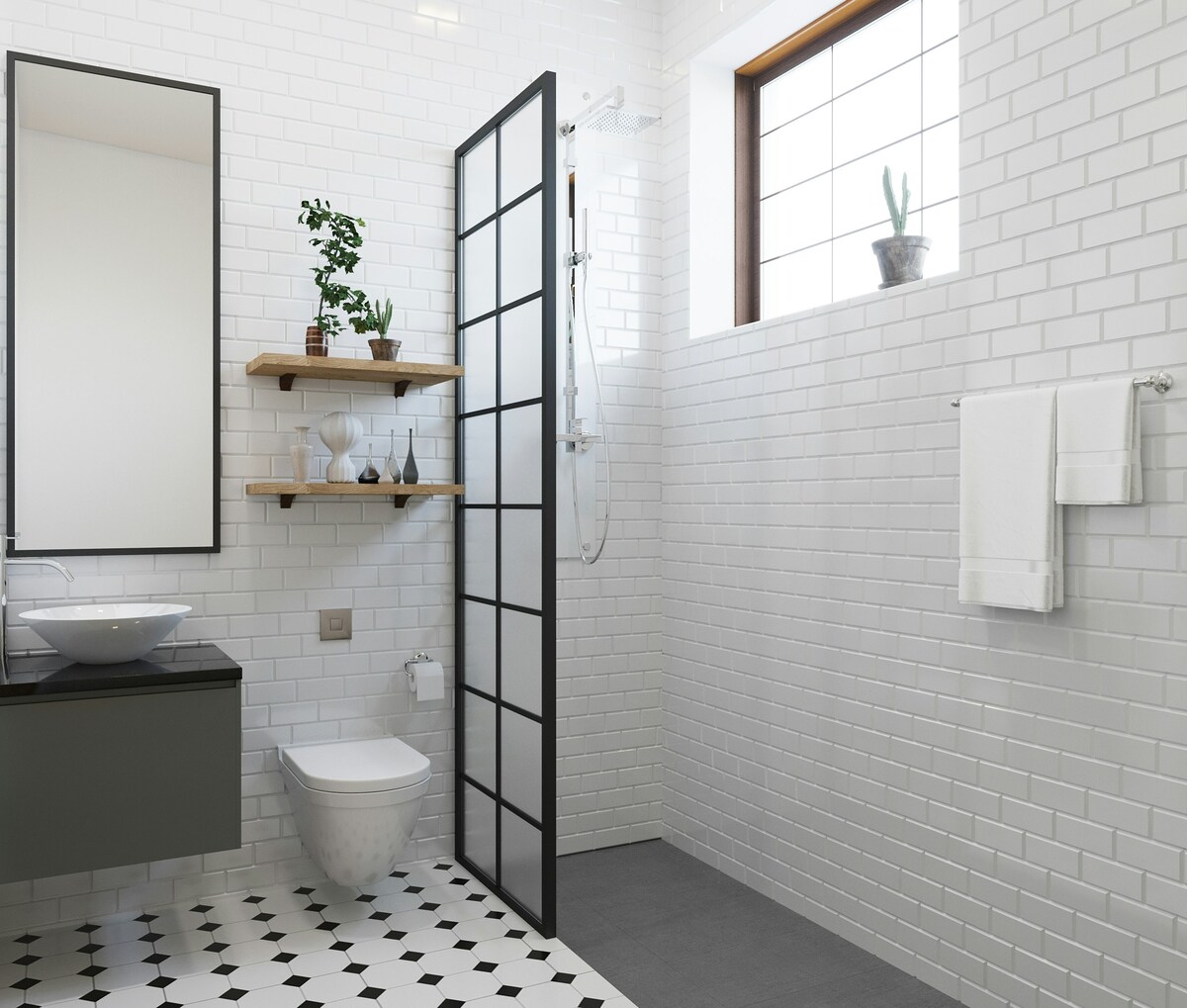
- Install a walk-in shower or wet room: These are better than ‘bath showers’ with shower curtains for many reasons, because the curtains are magnets for mould.
- Regularly clean your shower glass: Without the right cleaning routine, bathrooms can become full with millions of bacteria.
- Waterproof your bathroom: This prevents dampness, stops mould growing and provides better insulation.
- Remove old silicone sealant: Over time, bathroom sealant can lose its sheen, becoming grimy, mouldy and less effective.
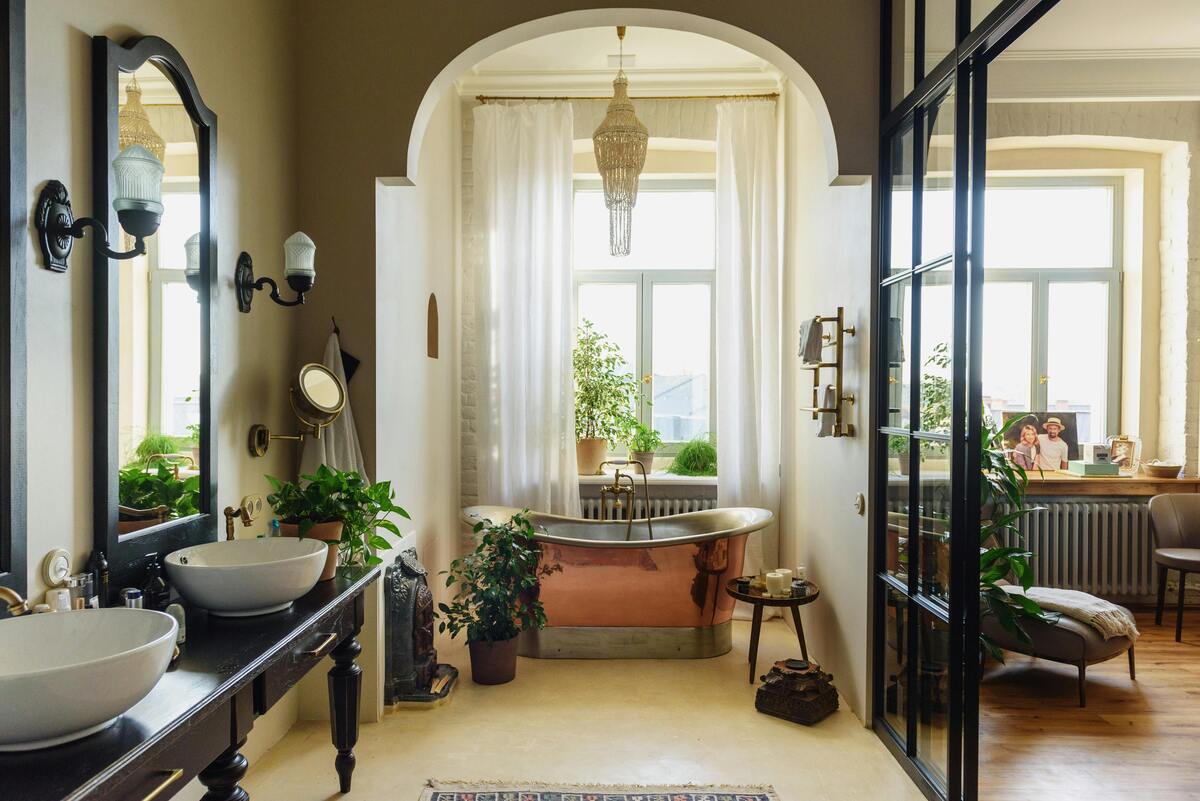
- Buy bathroom plants that absorb moisture: Plants in the bathroom don’t just add nature to it, but they’re also a way to help regulate humidity. Some plants attract and then absorb the moisture from the air, thereby reducing humidity and avoiding the build up of mould or mildew.
Also, read our full guide on how to get rid of mould in bathrooms.
Final thoughts: Bathroom dehumidifiers
If you’re looking online for the best dehumidifier for bathrooms, we don’t recommend it. The instruction manuals should include warnings specifying that you should not use a dehumidifier in the bathroom.
Also, be wary of ‘portable’ dehumidifiers because this doesn’t necessarily mean that they are wireless – they could just be easy to carry, but might still rely on mains power and still needs to be explicitly IP-rated. Standard sockets should never be within 3m of a bath or shower.
Some portable dehumidifiers are wireless, but even wireless models are usually not IP-rated for bathroom zones unless explicitly designed for that purpose.
We hope this guide has helped you think about how to choose the right ventilation option for your bathroom.
For other articles, please take a look at our full blog – with articles including:
- Replacing a bath with a shower
- Wet room ideas for the disabled
- Bathroom blinds ideas
- Shower room ideas to inspire you
If you need a bathroom refurb, Ability Bathe can help. We are bathroom fitters Devon trusts and we’re also bathroom fitters Torquay loves.
In addition, we’re bathroom fitters Exeter uses, bathroom fitters Plymouth… In short, we’re the South-West bathroom specialists.
We’re a local family-run bathroom design and installation business, with 35+ years of experience and offering 10-year guarantees on our installations. Please contact us for more information.